

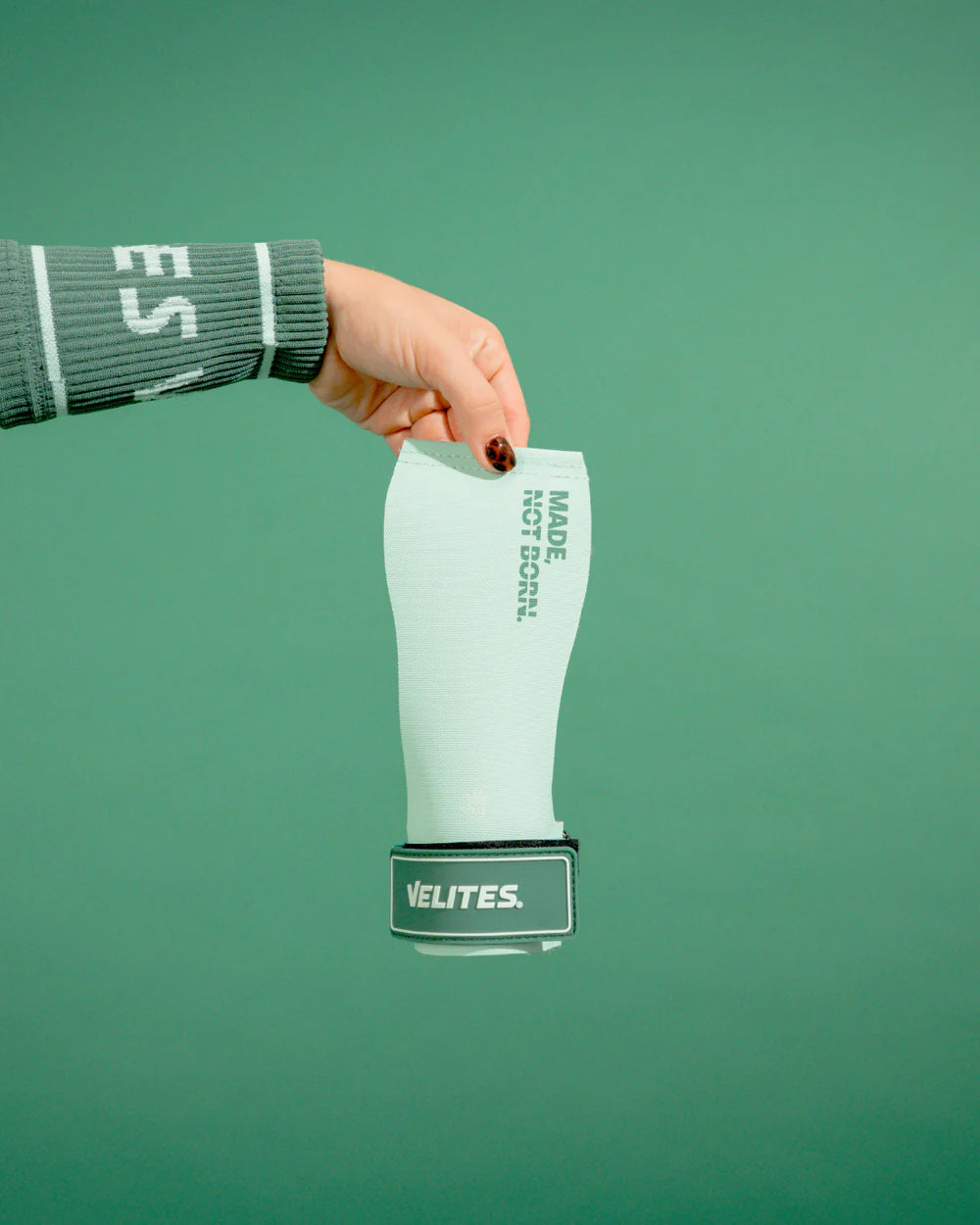





Most problems with grips aren't caused by the material: they're caused by size and fit. A well-chosen and well-positioned grip feels flat, not twisted, and doesn't leave skin exposed where it rubs most. Here I'll show you how to get it right the first time.
Why size is 80% of the success
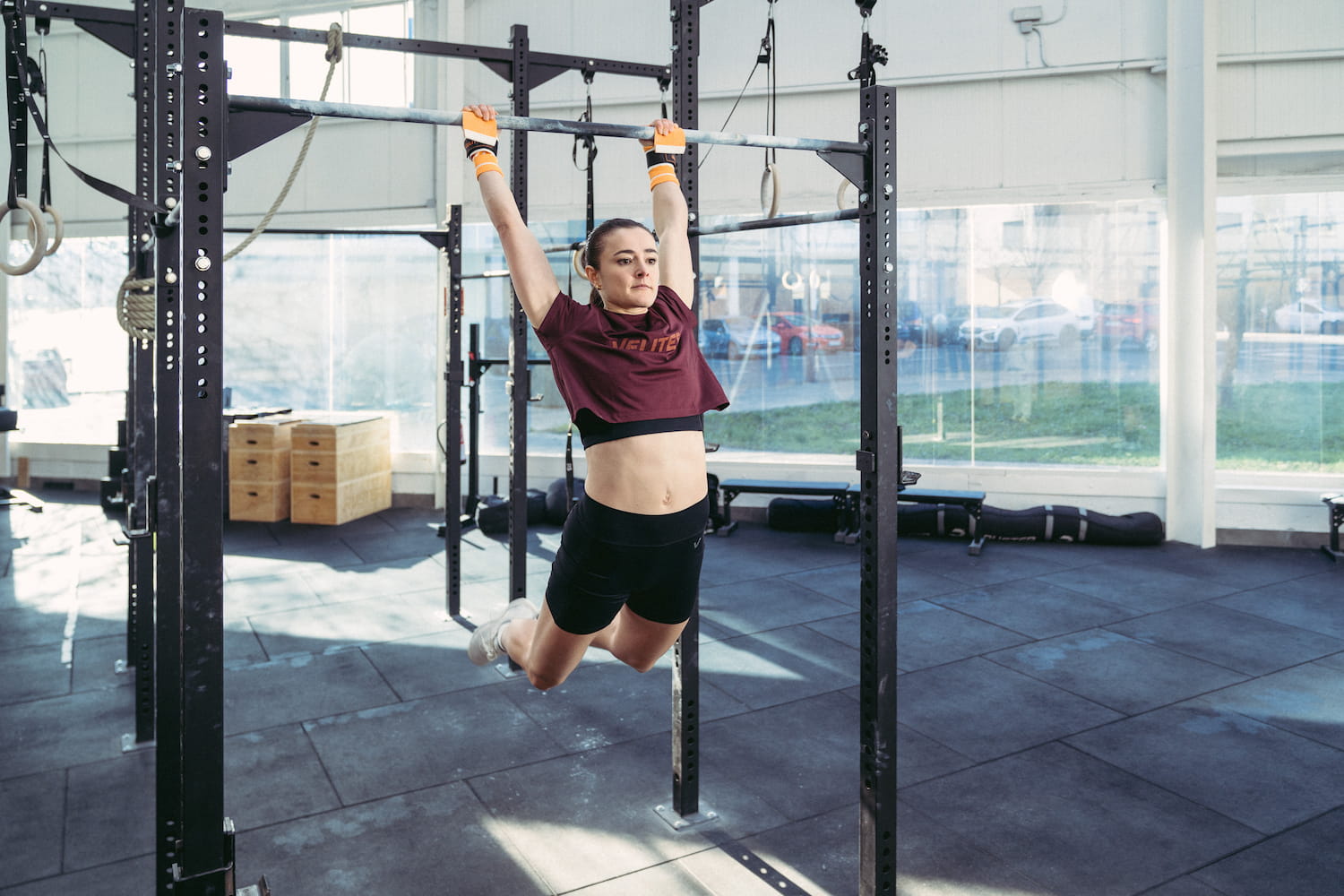
Before looking at models, think about how your hand hangs. In grips without holes (like the Velites Quad family), the important thing isn't the size of your hand at rest, but which area it covers the grip when you're hanging. If skin is exposed at the top, that's exactly where the hot spot will appear. That's why so many issues are solved by going up a size or repositioning the grip one centimeter higher.
Key idea: when you hang, the grip should cover the upper part of the palm (where you actually rub), without wrinkles or rotations.
Practical sizing guide (with simple rules)
This isn't an exam, we want certainty. Read this like a quick locker-room chat and then do the test I suggest.
- If you're between two sizes, go up. Better to cover too much than to leave skin exposed at the top.
- Think in terms of 'friction zone', not 'small hand'. A 'small' hand might need L if its friction zone sits high.
- Firm Velcro, not strangling. If you over-tighten, you'll create folds; if you loosen, the grip will rotate.
Real example: Laura measured her palm and came out 'between M and L'. With L the grip covered the friction zone and the hot spot disappeared by rep 8. With M it kept 'rubbing' right where it shouldn't.
Correct placement: the grip must lie flat
Imagine you extend your hand as if to 'high-five'. The grip sits high, close to the base of the fingers, flat on the palm. Then you close your hand and hang: that's where it must work.
- Place it high, where it actually rubs. If you wear it low, friction will catch you above.
- Flat, no wrinkles. A wrinkle is a 'knife' of friction.
- Firm and straight Velcro. If you leave it loose, the grip will rotate; if you twist it, a fold will form.
Simple but effective: hang for 10–15 s before the WOD and feel if something 'pulls'. If there's a pull or wrinkle, lower and reposition before the first set.

6 colors available
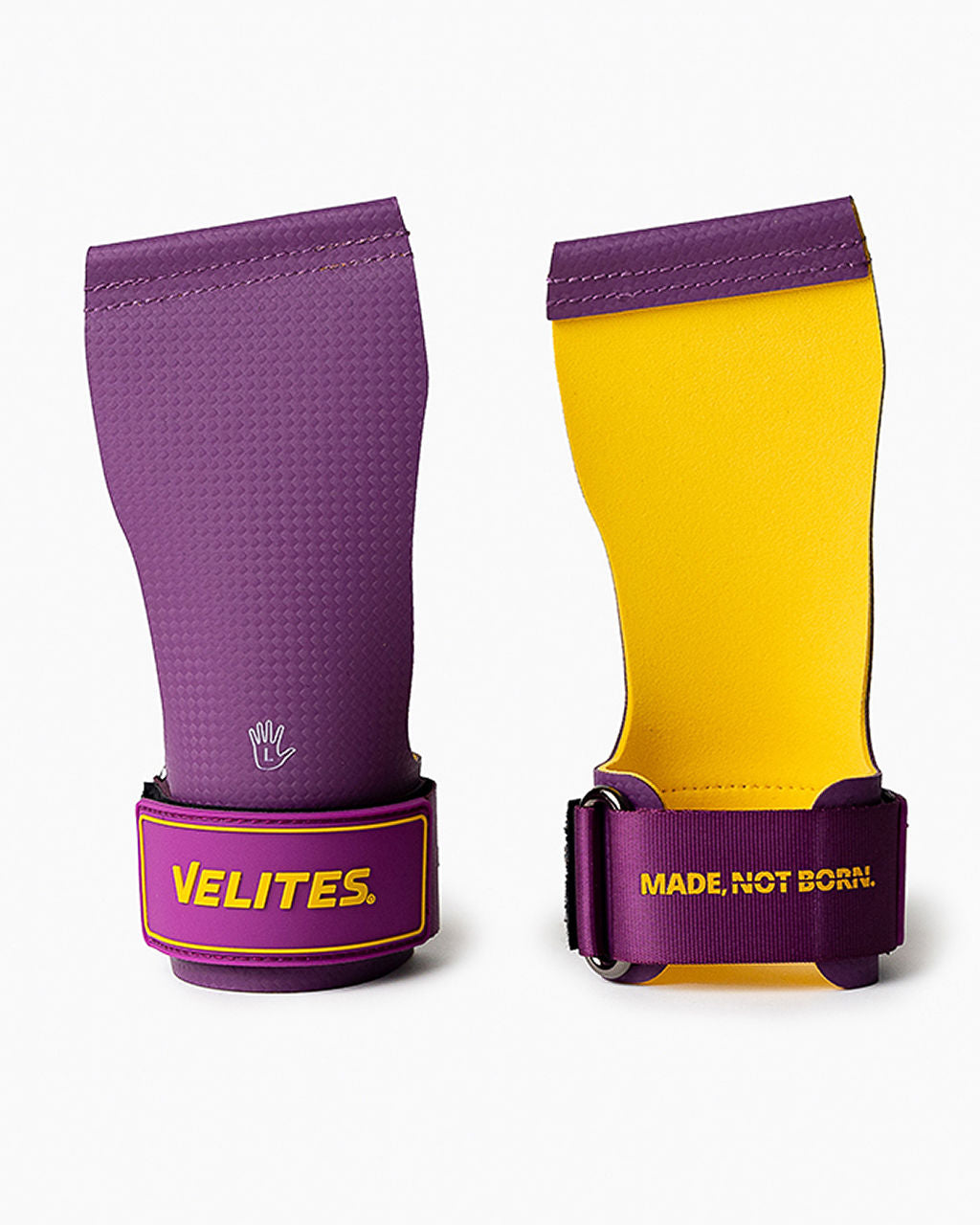
7 colors available
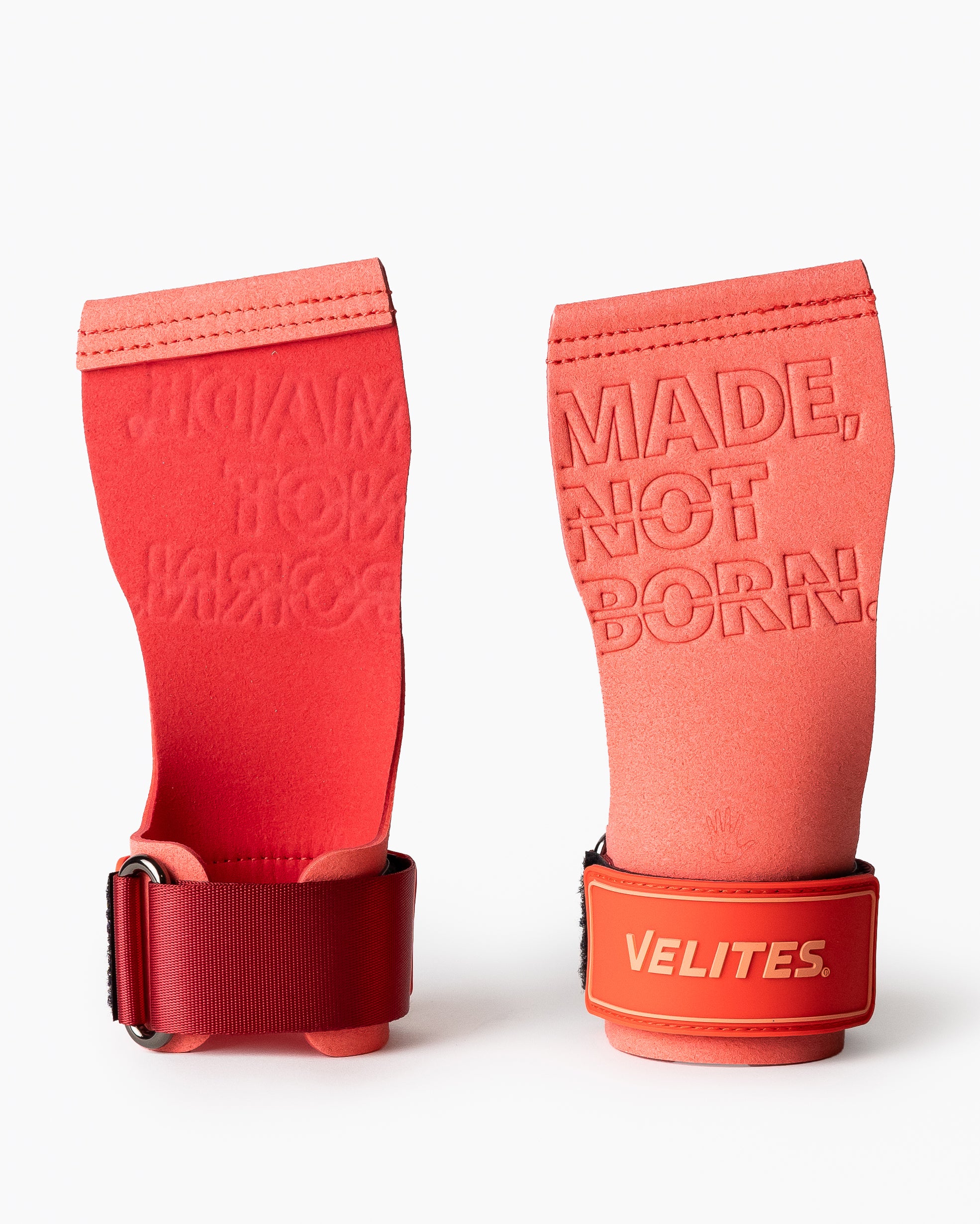
6 colors available
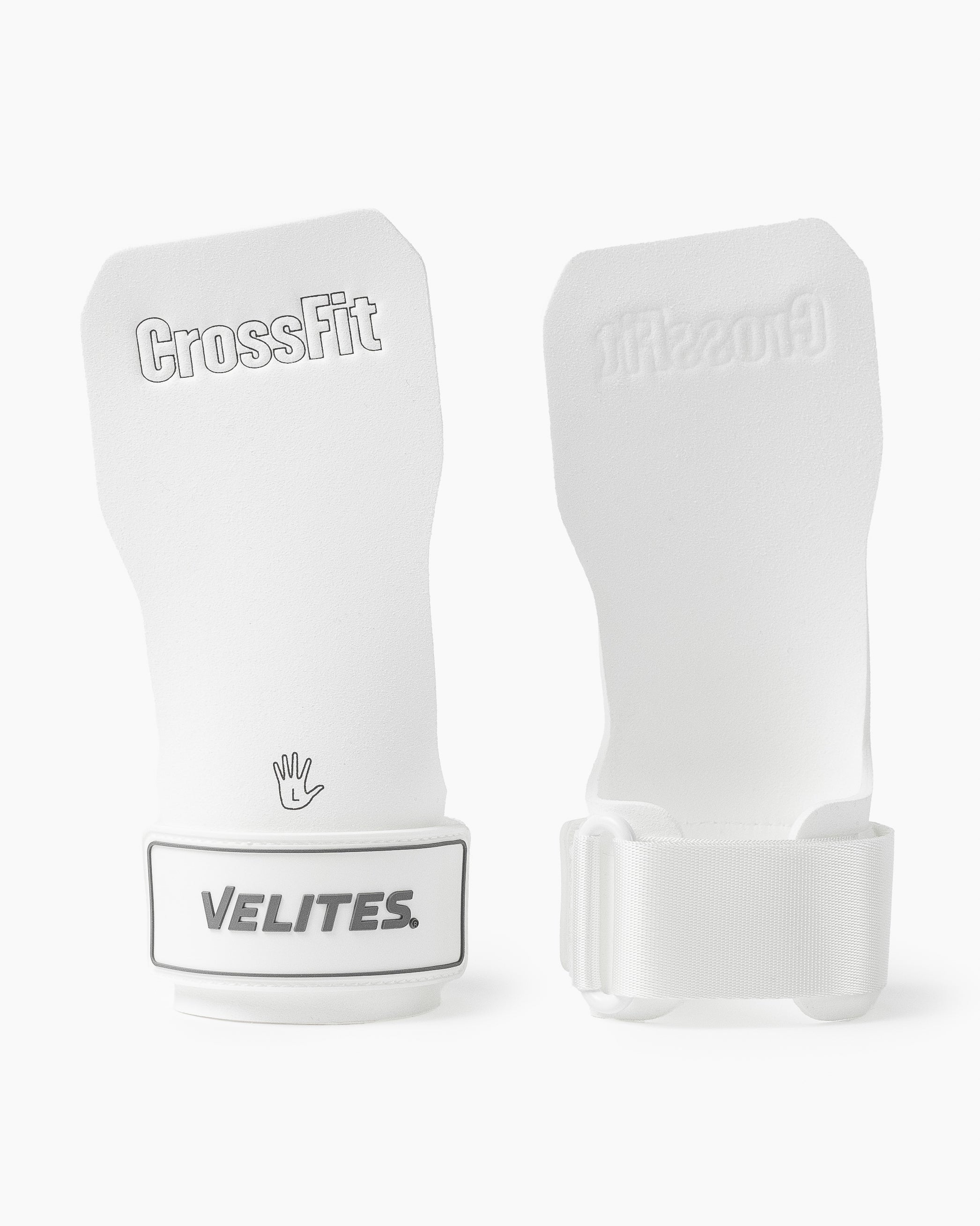
1 color available
Common mistakes (and their fix in a minute)
I'm not giving you a cold list; I'm telling you what we see every day and how we fix it on the whiteboard.
-
'It's too short at the top.'
Sign: skin exposed right near the base of the fingers.
Fix: go up a size and place higher. -
'It creates a fold in the center.'
Sign: localized burning always on the same rep.
Fix: loosen one notch, reposition flat and tighten again firm (not all the way). -
'It rotates when I hang.'
Sign: the grip rotates and leaves the palm at a diagonal.
Fix: check that the velcro is straight, without twists, and tighten one notch more. -
'On a rough bar it heats my hand.'
Sign: the knurling bites and skin fatigue appears.
Fix: prioritize protection (e.g., with a with magnesium system and grips that feel solid on rough bars, see below) and avoid folds.
The 'hang test' that decides everything
Before the main block, spend 45 seconds on this. It saves you half a session of frustration.
- Hang for 10–15 s with the hand you train with (bar or rings).
- Close and open the grip slightly.
- Listen: does it rotate? does it wrinkle? is there skin exposed at the top?
- Adjust: reposition higher, straighten the velcro, tighten one notch.
- Repeat 2 test reps. If it flows, you're ready.
Tip: if you still notice odd friction on a very 'biting' bar, consider changing the usage system (see below) and not just the placement.
And what about models? Choosing what feels best flat
Size and placement rule, but the character of each model helps everything lie flat without fighting. Think about the feel you're looking for and your environment.
Clean environment, no magnesium, you want very stable grip → Velites Quad Ultra. It tends to 'stick just enough' and removes micro-stops when everything is clean.
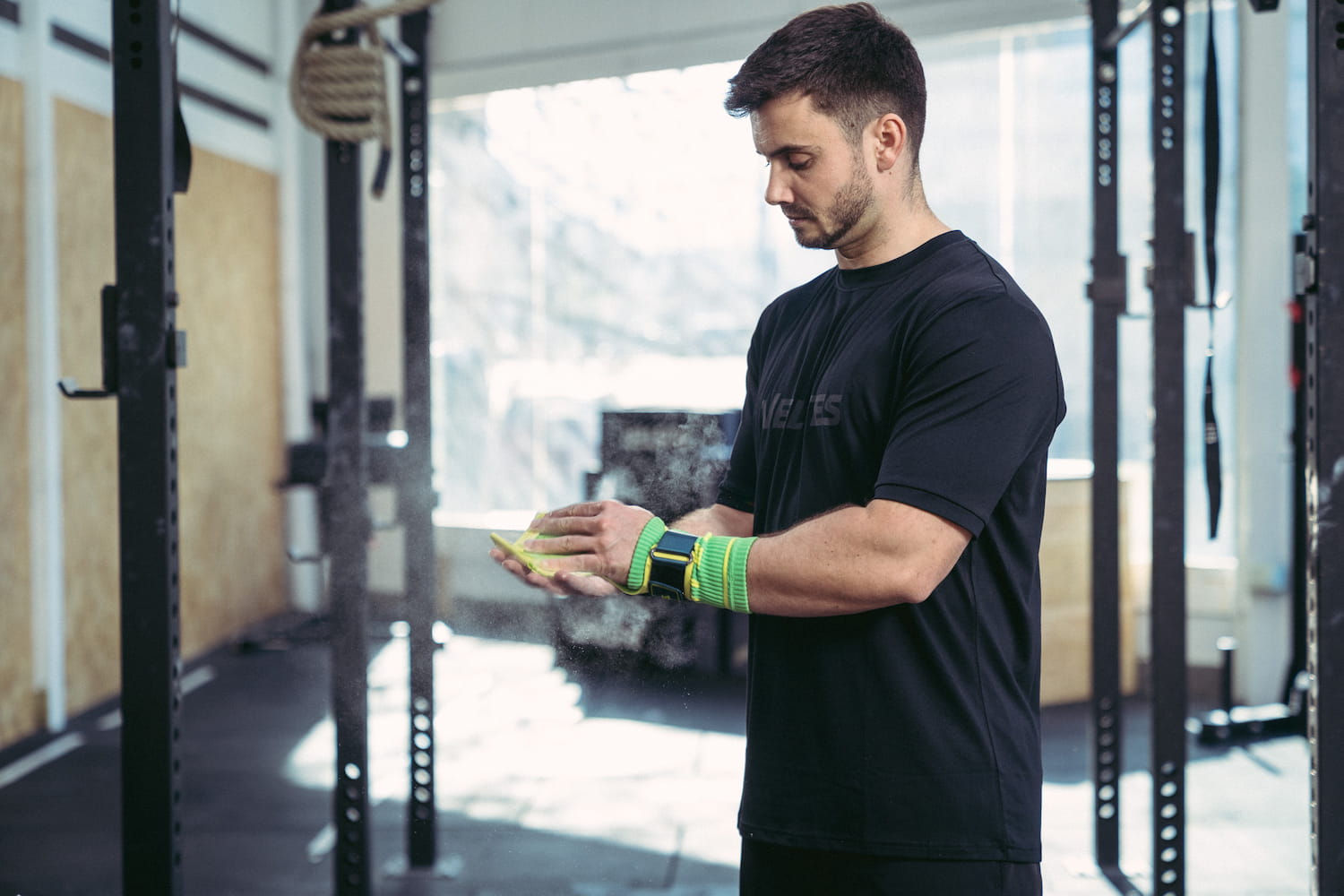
Variable environment (some foreign chalk, rings, peak hours) → Velites Quad All Terrain. It feels tactile and consistent when the surface changes during the WOD.
Rough bar and you use magnesium → Velites Quad Pro (balanced) or Velites Quad Carbon (very solid feel on marked knurling). With a thin layer of chalk and flat adjustment, the palm suffers much less.
You compete and don't want issues with rules → Velites Quad Competition. Compete with what you train with; if in doubt, this is your wildcard.
Real example: on a smooth bar, Ultra + high placement = sets that flow. On a rough bar, Carbon + thin layer + firm velcro = calm palm and stable sets.
What to do if, even after adjusting, something's off
Sometimes you do everything 'right' and the feel doesn't follow. Normal. Have a quick plan B:
- Change bar or brush for 20–30 s. The accumulated chalk layer creates 'invisible' folds in the feel.
- Change system (no ↔ with magnesium). On hot days or very rough rig, 'chalk mode' with a thin layer stabilizes.
- Check wrist wraps. If they encroach on the palm, they create tension and folds.
- Accept going up a size. A size that covers at the top is worth more than any hack.
Express maintenance that keeps the fit day to day
A perfect fit today is useless if tomorrow the grip is damp or the velcro full of lint. Two habits and that's it.
- Air-dry after training (out of the bag).
- Velcro clean and closed when storing; remove lint with your hand or a soft brush.
(If you want detailed washing and drying protocols, check Chapter 7.)
7 colors available
6 colors available
6 colors available
1 color available
Questions you ask us daily
'I have a small hand, should I always order a small size?'
No. For holeless grips what matters is what it covers when hung. Between two sizes, go up.
'If I tighten the velcro more, does it grip better?'
Not necessarily. If you strangle it, you'll create folds. Tighten firm and straight, not all the way.
'With rings I feel it doesn't release.'
Use less chalk or a grip with a more tactile (All Terrain). And practice high placement so the material doesn't 'stick' in the transition.
| Magnesium | No chalk | Chalk | No chalk |
| Bar surface | Smooth and knurled bar | Knurled bar | Smooth bar |
| Accessories | Wristbands + carry bag | Wristbands | Wristbands + carry bag |


Keep exploring the complete guide:
- benefits of training with hand grips
- tips for choosing hand grips
- when to apply chalk on hand grips
- from beginner to competitor: the right grips
- which Velites model to choose
- how to properly care for your grips
- safety and prevention with grips
- grips suitable for official events
- why try the Quad Ultra

Leave a comment
This site is protected by hCaptcha and the hCaptcha Privacy Policy and Terms of Service apply.