

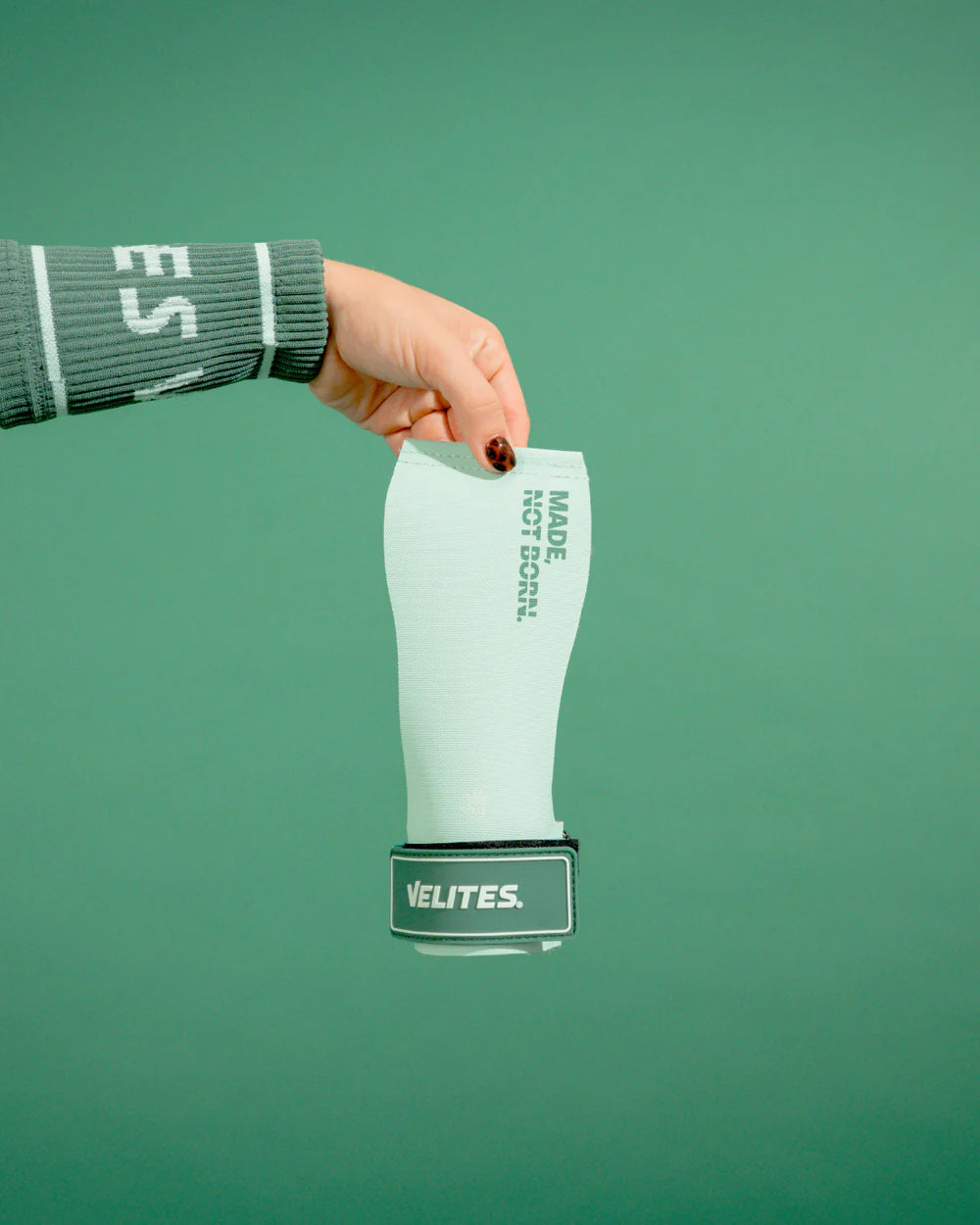



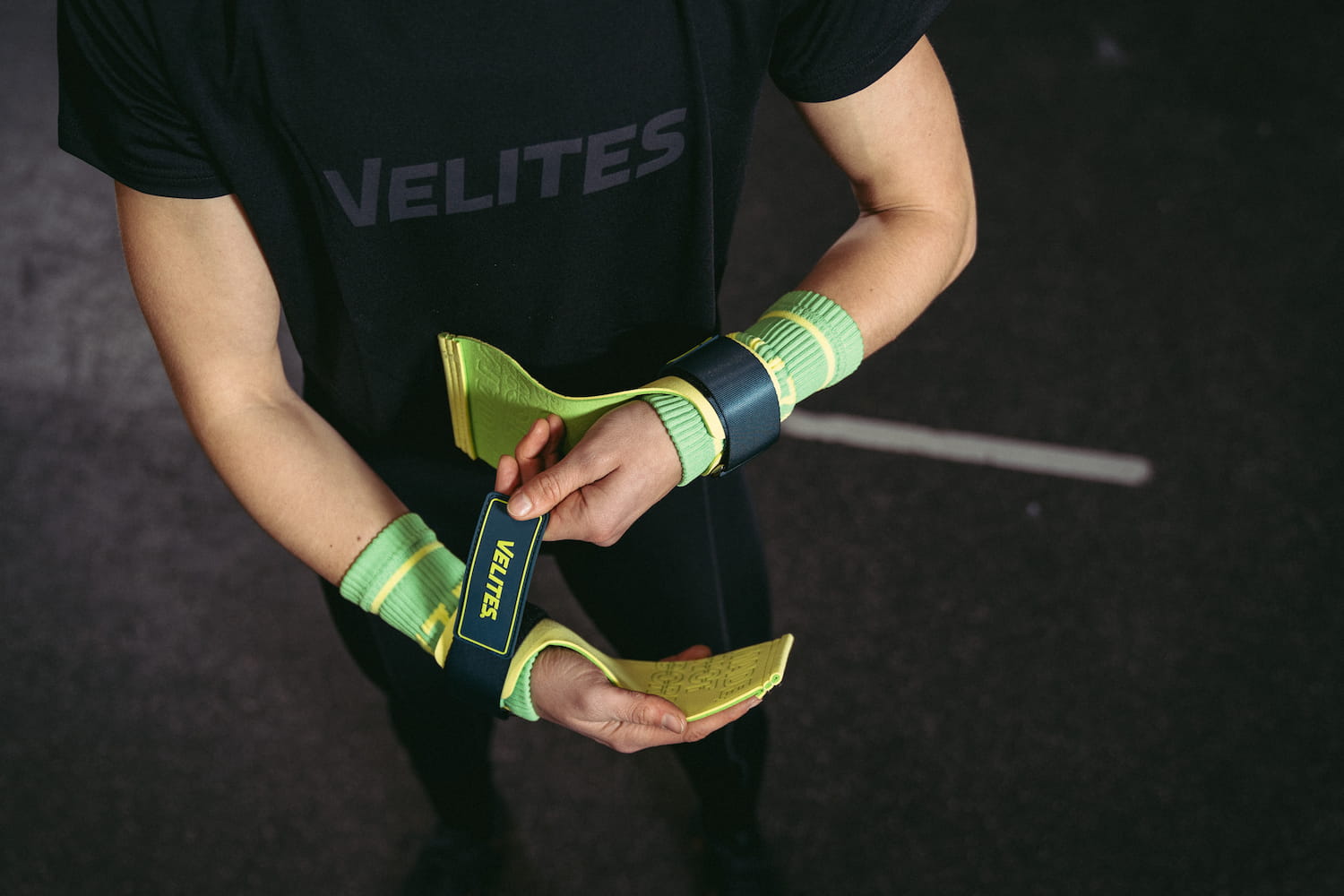
CrossFit hand grips are hand protectors placed between the palm and the bar or rings to reduce friction, prevent chafing, and maintain a stable grip. Their function isn't to spare you pain, but to allow you to train more volume with clean technique and fewer interruptions: linking pull-ups, toes-to-bar, muscle-ups, or ring transitions without your skin becoming the set's limiting factor.
You start hanging from the bar or rings and the session gets cut short by slips, readjustments, and hotspots on the palm.
It's not always a matter of strength; often it's contact and skin tolerance. That's where grips come in: they help you stay hung with stability, protect the hand, and accumulate quality volume to progress.
What grips are and how they impact your training
A grip is the interface between your hand and the apparatus (bar or rings). Depending on the model and the environment, it can prioritize protection or also add consistency to the grip.
- With protection: it decreases direct friction and delays the onset of chafing.
- With a stable grip: you reduce micro-slips and readjustments, chaining more repetitions without breaking the rhythm.
Result: more time practicing clean technique and less time fighting the surface.
Protection vs grip: what really changes
- Protection = less friction. Keeps the skin more protected during long blocks.
- Grip = fewer micro-stops. If contact is consistent, you maintain the set and focus on mechanics (hollow/arch, kipping timing, transition).
For beginners, the biggest leap doesn't come from “enduring pain” but from gaining consistency: fewer interruptions, more motor learning.
Beginners: why grip accelerates your progress
If every 2-3 reps you have to readjust the grips, you lose perspective on technique and the set.
A grip that doesn't rotate, stays flat and provides stable contact allows you to keep the rhythm: you go further with less hand fatigue and practice quality technique from the start.
See VELITES grips comparison:
| Chalk | Without chalk | Chalk | Without chalk |
| Bar surface | Smooth and knurled bar | Knurled bar | Smooth bar |
| Accessories | Wrist wraps + carry bag | Wrist wraps | Wrist wraps + carry bag |


Common issues and quick fixes
1) The bar dictates
- Clean bar → direct contact, predictable behavior.
- Bar with accumulated chalk → a layer appears that alters friction; the grip becomes irregular.
Solution: if you train without chalk, choose a clean bar or clean it (brush/cloth) before the work block.
2) Placement and adjustment
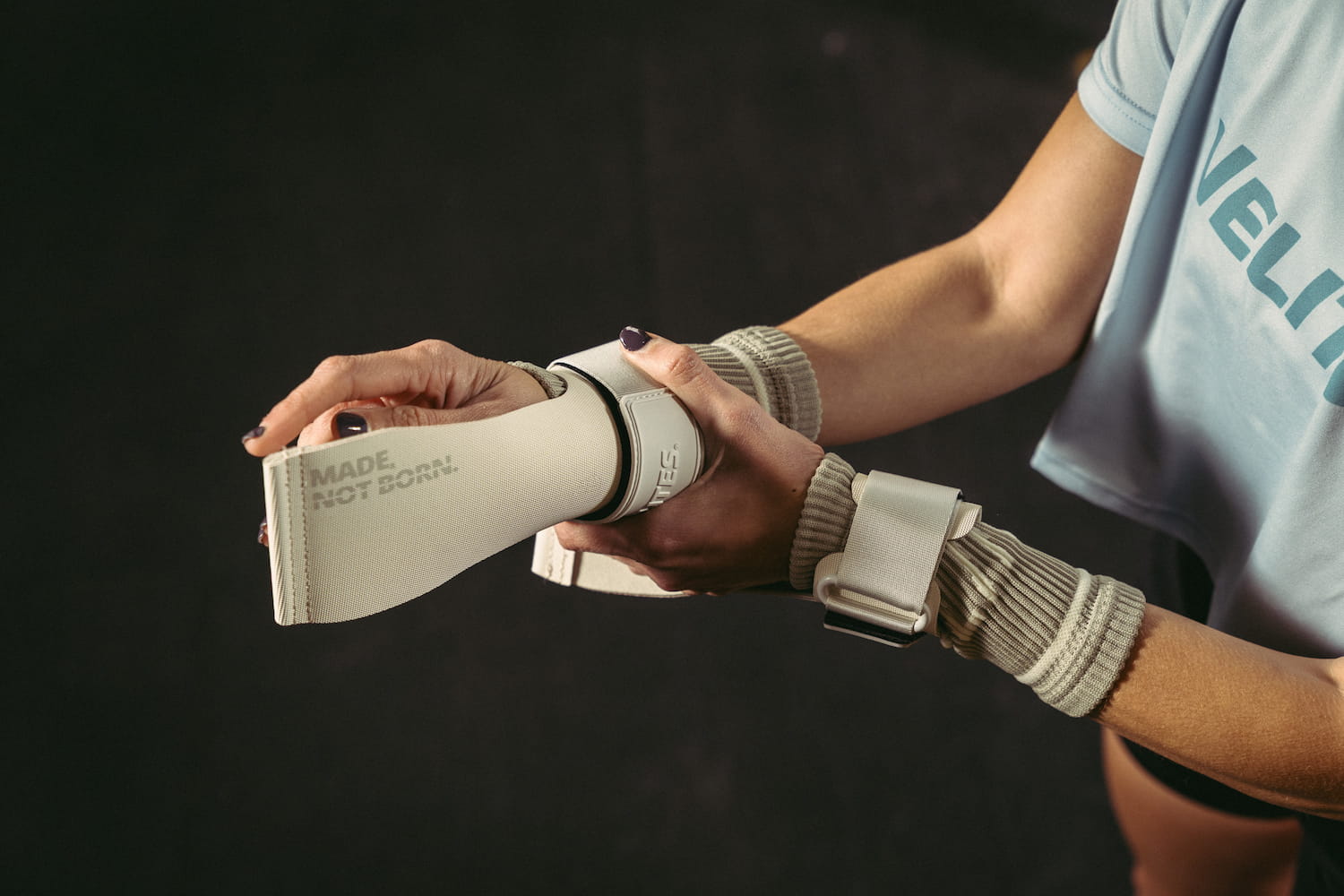
- On holeless grips, place them high (the actual friction zone) and close the velcro firmly.
- If it rotates or folds, a hotspot will appear: reposition and readjust.
3) Technique and volume
- A grip doesn't replace technique; it allows you to train it more with fewer stops.
- Keep the kipping controlled; reduce unnecessary friction.
Quick checklist before you hang
- Bar: clean or with accumulated chalk?
- Texture: smooth or rough (affects friction and control).
- Moisture: dry your palm and the bar if necessary.
- Fit: grip flat, without folds, velcro tight.
- Safety: if the movement requires rotation (e.g., pullovers), avoid a high grip without chalk (we expand on this in Chapter 8).
Grip recommendations according to training 'context'
- Clean bar, without chalk: Quad Ultra → high grip + protection (2.9 mm).
- Variable environment (clean/'loaded'), without chalk: Quad All Terrain → more stable performance and greater feel (2.1 mm).
- With chalk / rough bar: Quad Pro or Quad Carbon (and Quad Competition if you're concerned about rules because you're competing).
Note: if the bar is heavily 'caked', cleaning it first usually fixes most of the sensations.
Quick FAQs
Do grips work for everything?
Avoid a high grip without chalk on movements that require rapid hand rotation (e.g., pullovers). We explain this in Chapter 8.
How long do they last?
It depends on volume, bar texture, and habits. Wash them on a short cold cycle and air dry; care for the velcro and air them after training (Chapter 7).
Do I need chalk?
Not always. If you control bar cleanliness, a system without chalk can give you more consistency and fewer intermediate steps, especially when starting out (Chapters 2 and 3).
Are grips necessary to do CrossFit?
It's not mandatory, but highly recommended when you start accumulating volume on the bar or rings. Without grips, the skin becomes the first point of fatigue: chafing and tears slow your technical progression much earlier than strength or cardio.
When is it a good time to start using grips?
When you can already string together 3-5 pull-ups or when you notice the palm becoming irritated during long gymnastics blocks. Starting early lets you learn correct contact with the grip from the beginning and build technique without pauses forced by your skin.
Grips or gloves better for CrossFit?
Grips outperform gloves in gymnastics: they offer flat contact with the bar and allow fine control of the grip. Gloves add volume between the hand and the bar, which reduces sensitivity and makes kipping harder. For bar and rings, grips; for weightlifting, bare hand or tape.
Does duct tape or athletic tape serve as a substitute?
Tape works as a temporary solution to protect an already existing abrasion, but it doesn't provide a stable grip. Grips are designed to accumulate volume without constant readjustments; tape shifts, gets dirty with chalk, and isn't suitable for long training sessions.
Final conclusion
Key idea: grips allow you to train with continuity: protection + grip suited to your environment.
Continue exploring the full guide:

Leave a comment
This site is protected by hCaptcha and the hCaptcha Privacy Policy and Terms of Service apply.